Faith, Family & Legacy
The Stories of Faith We Forget to Tell
Why the people and stories of God's faithfulness in our lives are worth remembering, recording, and sharing.
Somewhere in your life, there may be a story you've told so many times that you hardly think about it anymore.
Or perhaps there's one you've never told at all.
Maybe it's the story of how you first came to know the Lord. Maybe it's an answered prayer that came during a particularly difficult season. Perhaps it's a moment when God used an ordinary person to make an extraordinary difference in your life.
It might be a story of joy, a season of uncertainty, a lesson learned through failure, or a time when you discovered that God's faithfulness was greater than you understood.
Whatever the story, there's something worth considering:
A Biblical Pattern of Remembering and Telling
Throughout Scripture, we find reminders of the importance of remembering what God has done and sharing those accounts with others.
“We will not hide them from their children, shewing to the generation to come the praises of the LORD, and his strength, and his wonderful works that he hath done.”Psalm 78:4, KJV
The psalmist wasn't simply encouraging people to preserve interesting family history. He was calling God's people to remember His works and make them known to future generations.
In Joshua 4, after the Israelites crossed the Jordan River, God instructed Joshua to have twelve stones taken from the river and set up as a memorial.
Those stones had a purpose.
When future generations asked what they meant, the Israelites were to tell them how God had brought His people across the Jordan on dry ground.
The memorial created an opportunity to remember and tell the story.
We may not build memorials of stone today, but we have stories that serve a similar purpose. They remind us of what God has done, and they give us opportunities to tell others about His faithfulness.
Someone Helped Shape Your Faith
Think for a moment about the people who have influenced your spiritual journey.
Perhaps it was a parent or grandparent who prayed with you and taught you Scripture.
Maybe it was a Sunday school teacher who faithfully prepared lessons week after week, never knowing which words might stay with you into adulthood.
Perhaps a pastor preached a sermon that helped you understand something about God you had never considered before.
Maybe it was a friend who invited you to church, a neighbor who showed you Christlike kindness, or someone who took the time to explain the Gospel when you needed to hear it.
Some of those people may still be part of your life.
Others may have passed away, moved away, or simply become part of your distant memories.
Yet their influence remains.
Better yet, if that person is still living, have you ever told them?
Sometimes we assume people know the impact they've had. But they may have no idea.
An encouraging note, a phone call, or a simple conversation could mean more than we realize.
And when we record our own faith stories, we have an opportunity to preserve the stories of those who helped shape us as well.
Your Story Doesn't Have to Be Extraordinary
When people hear the word testimony, they sometimes imagine a dramatic conversion experience or a remarkable account of deliverance from a difficult past.
Those testimonies can be powerful.
But not every faith story includes a crisis situation or a dramatic story.
Perhaps you grew up in a Christian home and came to know the Lord at a young age. Maybe your spiritual journey has been marked more by gradual growth than an overnight change.
Perhaps the most significant lessons you've learned came through ordinary experiences: raising children, caring for aging parents, serving others, facing disappointment, or learning to trust God through life's uncertainties.
Those stories matter, too.
A testimony doesn't have to impress people to encourage them.
Sometimes hearing how someone continued trusting God through years of ordinary responsibilities is exactly what another person needs.
And sometimes the lessons we learned through our mistakes are just as valuable as the stories of our victories.
The Stories We Don't Realize We're Forgetting
Memory is an interesting thing.
We may clearly remember an event from thirty years ago while struggling to recall something that happened last month.
And over time, even meaningful experiences can begin to fade.
We forget the details of prayers that were answered.
We forget the circumstances surrounding an important decision.
We forget the words of encouragement someone offered when we desperately needed them.
We may even forget how uncertain we once felt before seeing how God worked through a particular situation.
That's one reason recording our faith experiences can be so valuable.
Writing down what happened, what we were thinking, what Scriptures encouraged us, and what we learned can preserve details that might otherwise disappear.
It also gives us something to return to when we face new challenges.
Remembering God's past faithfulness can encourage us to continue trusting Him in the present.
A Spiritual Legacy Reaches Beyond Family
When we think about leaving a legacy of faith, we naturally think about our children and grandchildren.
And Scripture certainly emphasizes the importance of teaching the next generation.
Deuteronomy 6:6–7 encourages God's people to keep His words in their hearts and teach them diligently to their children.
But spiritual influence doesn't stop at the boundaries of family relationships.
A single person without children can leave a remarkable legacy of faith.
So can a teacher, mentor, pastor, neighbor, coworker, or faithful friend.
Consider the people who have influenced your walk with the Lord. Not all of them were related to you.
Likewise, you may be influencing people whose lives will continue long after your own.
You may never know how a conversation, an act of kindness, a prayer, or a word of biblical encouragement affected someone.
Our responsibility isn't to measure the reach of our influence.
It's to be faithful with the opportunities God gives us.
Five Faith Stories Worth Preserving
You don't have to write an autobiography to begin recording your spiritual journey.
Start with one story.
Here are five places to begin:
The beginning of your faith journey. How did you first hear about Jesus? Who introduced you to the Gospel? What circumstances surrounded your decision to trust Christ?
Someone who helped shape your faith. Who taught you, encouraged you, prayed for you, or challenged you to grow spiritually? What did that person do that made a lasting difference?
A time when you experienced God's faithfulness. Was there a difficult season, an answered prayer, or an unexpected provision that helped you recognize God's care?
A lesson you learned through a difficult experience. What did you learn about God, yourself, or His Word during a season of uncertainty, disappointment, or struggle?
Something you want others to remember. If you could share one important lesson from your walk with the Lord, what would it be? Is there a Scripture passage that has been especially meaningful to you?
You don't have to answer every question at once.
Choose one. Write what you remember. Include the details that matter to you.
And if writing isn't your preference, consider recording yourself telling the story or sharing it in a conversation with someone you care about.
The important thing is to begin.
Don't Wait Until Someday
It's easy to assume we'll share these stories later.
When life slows down.
When the children are older.
When we retire.
When we have more time to sit down and remember.
But someday has a way of becoming another year, another decade, or a missed opportunity.
There may be someone in your life right now who would benefit from hearing what God has taught you.
There may be someone who needs to know how you came to faith.
There may even be someone who would be deeply encouraged to discover the role they played in your spiritual journey.
“One generation shall praise thy works to another, and shall declare thy mighty acts.”Psalm 145:4, KJV
We have the privilege of being part of that continuing testimony.
Not because our lives are remarkable, but because the God whose faithfulness we have experienced is worthy of being remembered and praised.
Your Story Is Worth Telling
At Pursuing Perfect Peace Press, one of our hopes is to encourage Christians to preserve and share the lessons, experiences, and wisdom God has given them.
Whether you use a guided journal, a blank notebook, a voice recording, or a conversation around the kitchen table, the method matters less than the willingness to share.
So think about the people who helped shape your faith.
Remember the ways God has worked in your life.
And consider the stories you haven't told yet.
Perhaps today is a good day to begin.
A Free Resource to Help You Get Started
Five Faith Stories Worth Preserving
Download the free two-page printable, with reflection questions and space to begin recording meaningful moments in your spiritual journey.
Download the Worksheet (PDF)Want to Continue Preserving Your Faith Journey?
Our Tell Me About Your Faith Journey and Tell Me About the Godly Wisdom You Have Learned Legacy Journals offer guided prompts to help you reflect on your experiences, remember important relationships, and preserve the lessons and biblical wisdom you've gained along the way.
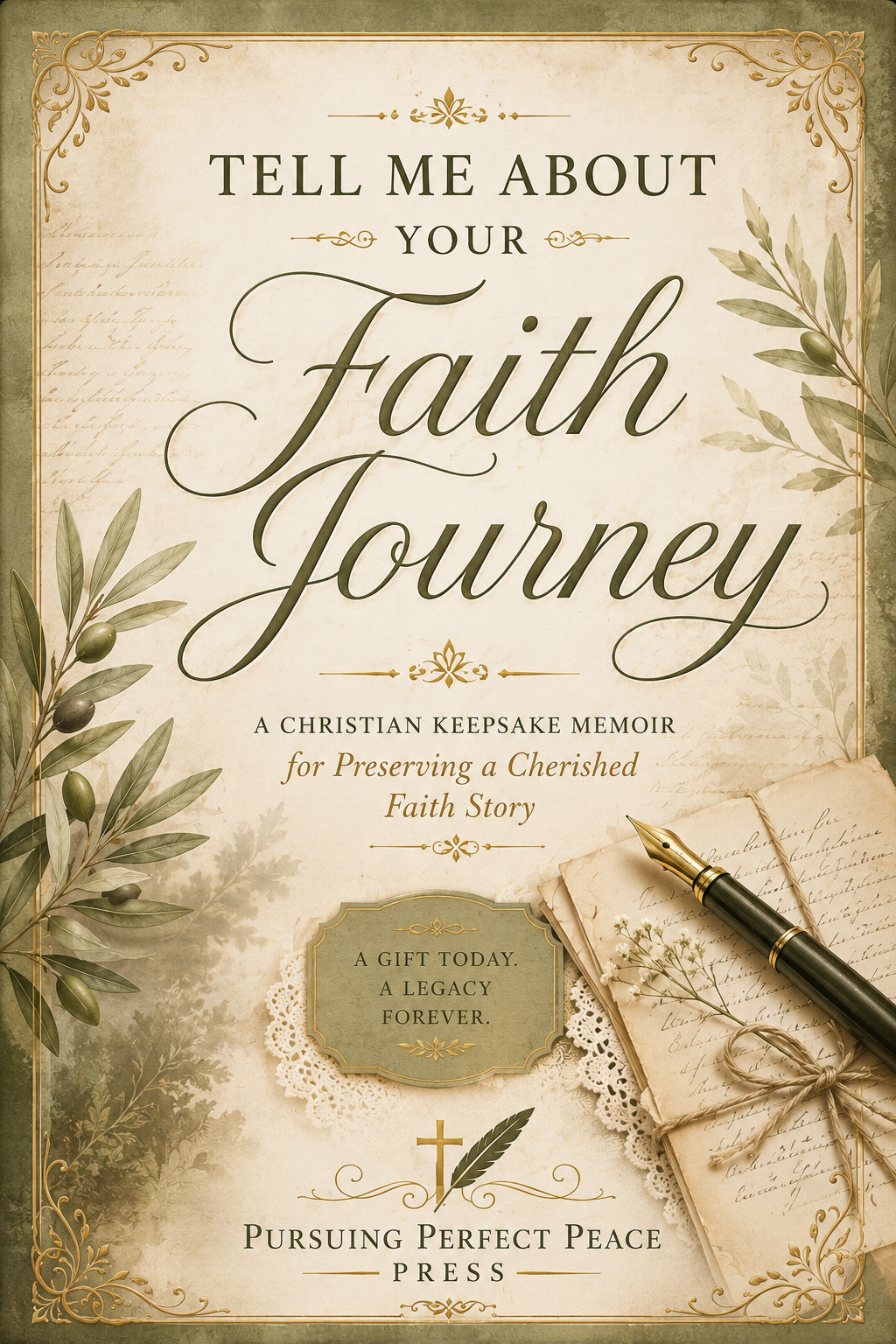
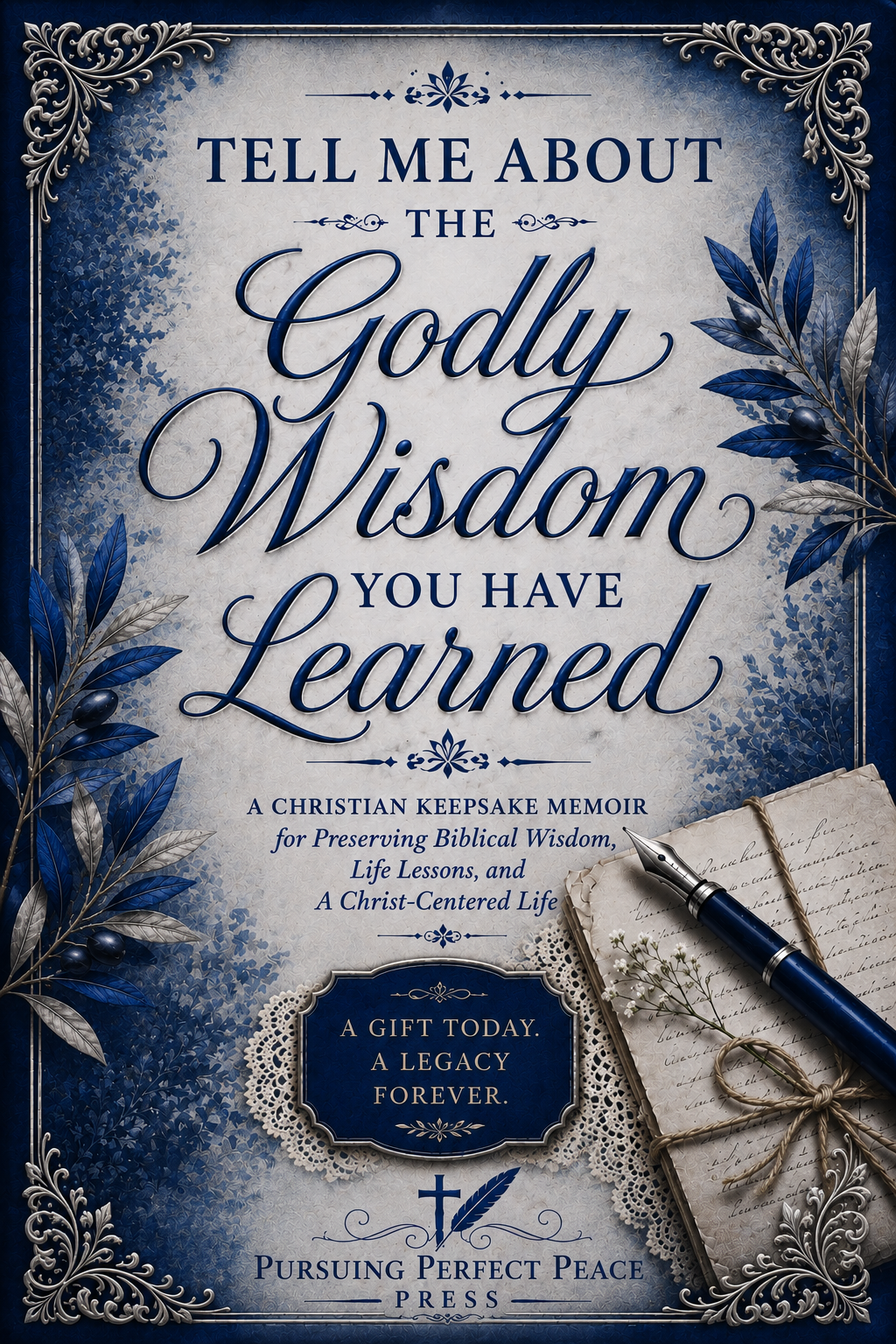
You can get started with a free downloadable PDF edition of Tell Me About Your Faith Journey, available through the Pursuing Perfect Peace Press website.
Prefer a physical journal to keep for yourself or give to others? Both Legacy Journals are also available in paperback and hardcover through Amazon.