Faith, Family & Legacy
Your Life Is a Testimony
Recognizing God's faithfulness throughout the ordinary moments, changing seasons, and defining experiences of your life.
A Free Resource Is Included
Ready to Begin Sharing Your Stories?
Be sure to see the free Life Story Question Collection at the end of this article. Its 270 thoughtfully organized prompts can help you begin preserving your memories, faith journey, life lessons, and stories of God's faithfulness.
See the Free ResourceWhen we hear the word testimony, we often think about the story of how someone came to know Jesus Christ.
That is certainly an important part of a Christian's testimony, but it isn't the whole story.
Our faith journey includes the people who first taught us about God, the questions we wrestled with, the Scriptures that shaped us, the prayers we prayed, and the difficult seasons through which we learned to trust Him.
It also includes ordinary days that may not have seemed spiritually significant at the time.
A conversation with a grandparent. A Sunday school teacher who remembered our name. A decision that changed the direction of our life. A season of waiting when nothing seemed to be happening. A mistake that taught us humility. A prayer that was answered in a way we didn't expect.
These moments may appear disconnected when they happen. Looking back, however, we may begin to see how God used people, circumstances, disappointments, opportunities, and His Word throughout our lives.
From Individual Stories to a Faith Journey
Individual stories are part of something larger. Together, they form a faith journey.
Your faith journey may have begun before you were old enough to recognize it. Perhaps someone prayed for you when you were a child. Maybe a parent, grandparent, neighbor, pastor, or teacher introduced you to Scripture.
Perhaps you grew up attending church and heard about Jesus for years before you personally understood the Gospel.
Maybe you didn't grow up in a Christian home at all. Your first meaningful encounter with biblical truth may have come through a friend, a difficult circumstance, a book, a sermon, or someone who took the time to answer your questions.
Even before you knew what God was doing, He may have been placing people and experiences in your life that would eventually point you toward Him.
That beginning is part of your story. So are all the chapters that came afterward.
God's Faithfulness Is Often Clearer Looking Back
While we are living through a particular season, we rarely understand everything that is happening.
We may not know why a door closed, why a plan changed, or why an answer to prayer seemed delayed. We may wonder why God allowed a difficult relationship, an unexpected move, a financial struggle, an illness, or a season of uncertainty.
Years later, we may recognize that God used those circumstances to redirect us, prepare us, teach us, or bring someone into our lives.
“I will remember the works of the LORD: surely I will remember thy wonders of old. I will meditate also of all thy work, and talk of thy doings.”Psalm 77:11–12, KJV
Remembering gives us an opportunity to recognize what we couldn't always see at the time.
Perhaps a disappointment led you toward an opportunity you would never have considered otherwise. Maybe a difficult season taught you to depend upon Scripture in a way you hadn't before. Perhaps someone offered help at exactly the moment you needed it.
Looking back doesn't mean we'll find a simple explanation for every painful experience. Some questions may remain unanswered.
But reflection can help us recognize the places where God provided strength, comfort, wisdom, correction, or direction.
Ordinary Memories Are Part of Your Spiritual Story
Not every testimony includes a dramatic miracle or an unmistakable turning point.
Sometimes God's faithfulness is seen through years of ordinary responsibilities.
It may be found in raising children, caring for aging parents, remaining faithful in a difficult marriage, serving quietly in a church, or continuing to pray for someone who has wandered away from the Lord.
It may be seen in going to work each day, providing for a family, admitting when you were wrong, forgiving someone who hurt you, or choosing obedience when no one else knew about the decision.
Faith is lived in ordinary places. It is practiced in kitchens, hospital rooms, workplaces, classrooms, churches, cars, and conversations around the dinner table.
Many of these memories may seem unremarkable to you because you lived them. To someone else, they may reveal courage, perseverance, wisdom, sacrifice, or trust in God.
The ordinary details may also become the parts of your story that your family treasures most.
They may want to know what your childhood home looked like, what you did for fun, which family traditions mattered to you, how you met the people you loved, and what the world was like when you were growing up.
They may also want to know when your faith became personal, which Scriptures encouraged you, how you handled uncertainty, and what you learned about God through the different seasons of your life.
Your Questions and Spiritual Growth Belong in the Story
A faith journey isn't always a straight line.
There may have been seasons when you felt close to God and seasons when you struggled to pray.
Perhaps you accepted certain teachings when you were younger but later began examining them more carefully through Scripture. Maybe you wrestled with disappointment, unanswered prayer, church hurt, doubt, or confusion.
Perhaps a Bible passage corrected an assumption you had carried for years. You may have learned that some advice you once believed was biblical was actually based more on tradition, personal opinion, or popular teaching than on Scripture.
These experiences don't necessarily weaken your testimony. They may reveal how your faith became more personal, thoughtful, and firmly grounded in God's Word.
Spiritual growth often involves asking questions, admitting what we don't understand, returning to Scripture, and allowing God to correct us.
Recording those parts of your journey can help others understand that mature faith isn't the absence of questions. It is the willingness to bring those questions to God and examine them in light of His Word.
Difficult Chapters Can Be Recorded With Wisdom
Every life includes chapters that are difficult to revisit.
There may be grief, regret, family conflict, betrayal, illness, financial hardship, poor decisions, or relationships that didn't turn out as hoped.
Preserving your story doesn't require you to reveal every private detail. You're allowed to establish boundaries.
Some experiences may be too personal to share publicly. Certain stories may involve other people whose privacy should be respected. You may decide to write about what you learned without describing everything that happened.
The purpose of documenting your life isn't to reopen every wound or present yourself as someone who always made the right choices. It is to tell the truth with grace and wisdom.
Sometimes our mistakes teach lessons worth passing along. Sometimes our hardest seasons become the places where we learned the most about prayer, forgiveness, dependence upon God, and the sufficiency of His grace.
Your Changing Perspective Is Part of Your Legacy
Think about how differently you view life today compared with ten, twenty, or forty years ago.
What once seemed important may no longer matter very much. Something you took for granted may now feel precious. A lesson you resisted when you were young may have become wisdom you wish you had accepted sooner.
You may now understand a parent, teacher, pastor, or friend differently than you did at the time.
You may recognize that success isn't defined only by accomplishments, possessions, recognition, or financial security.
Perhaps you have learned that faithfulness in small things matters more than receiving attention for impressive things.
These changing perspectives are part of your legacy. You don't have to pretend that you always knew what you know now.
In fact, describing how your understanding changed may be one of the most valuable parts of your story. It allows others to learn alongside you.
Someone Else May Need What You Have Learned
We can't know exactly how our stories will affect others.
A child or grandchild may one day face a situation similar to one you experienced. A friend may find comfort in knowing that you also went through a season of uncertainty.
Someone struggling with faith may be encouraged to learn that your spiritual growth included questions and setbacks. A person who feels that his or her life has been ordinary may discover that quiet faithfulness matters deeply.
“Only take heed to thyself, and keep thy soul diligently, lest thou forget the things which thine eyes have seen, and lest they depart from thy heart all the days of thy life: but teach them thy sons, and thy sons' sons.”Deuteronomy 4:9, KJV
This verse reminds us that remembering and teaching are connected.
When we preserve what we have seen and learned, we create an opportunity for others to benefit from it.
Our stories don't replace Scripture, and our personal experiences aren't the standard by which truth is measured. But our stories can testify to the truth of God's Word and show how biblical principles were lived through real circumstances.
You Don't Have to Write an Autobiography
The thought of documenting an entire life can feel overwhelming.
You don't have to begin with your birth and write straight through to the present. You also don't have to remember every date or answer every possible question.
Begin with one memory.
Describe the home where you grew up. Write about someone who influenced your faith. Record the story of how you came to know Christ. Explain why a particular Scripture became meaningful to you.
Remember a prayer God answered or a difficult decision through which He gave you direction. Write about a mistake and what it taught you. Describe a family tradition, a church experience, a teacher, a friendship, or a season when you had to begin again.
One memory often leads to another.
You can preserve your stories in a notebook, on a computer, through an audio recording, or in a video interview. You can answer questions during conversations with family members or invite someone to record your answers for you.
The method matters less than beginning.
Questions Can Help Recover Forgotten Memories
Sometimes we don't know what we remember until someone asks the right question.
A broad request such as “Tell me about your life” can feel impossible to answer. A specific question is easier.
What was your childhood bedroom like?
Who first taught you to pray?
Which teacher made you believe you could accomplish something?
When did a Scripture passage speak directly to a situation you were facing?
What lesson do you most want the next generation to remember?
Questions like these give our memories somewhere to begin.
A familiar name, place, smell, song, Bible verse, or family tradition may bring back details we haven't considered in years. Those details can become the beginning of a story.
Begin Exploring Your Own Life and Faith Journey
Your life is more than a timeline of where you lived, where you worked, and what you accomplished.
It includes the people you loved, the decisions you made, the hardships you survived, the lessons you learned, and the ways your understanding changed.
For the Christian, it also includes the continuing story of God's faithfulness.
Where did your understanding of God begin? Who first introduced you to Scripture? When did the Gospel become personal to you? Which seasons most shaped your faith?
What has God taught you about prayer, obedience, forgiveness, discernment, and trust? What evidence of His faithfulness can you recognize now that you couldn't see at the time?
You may not be able to answer every question today.
A Free Resource to Help You Begin
The Life Story Question Collection
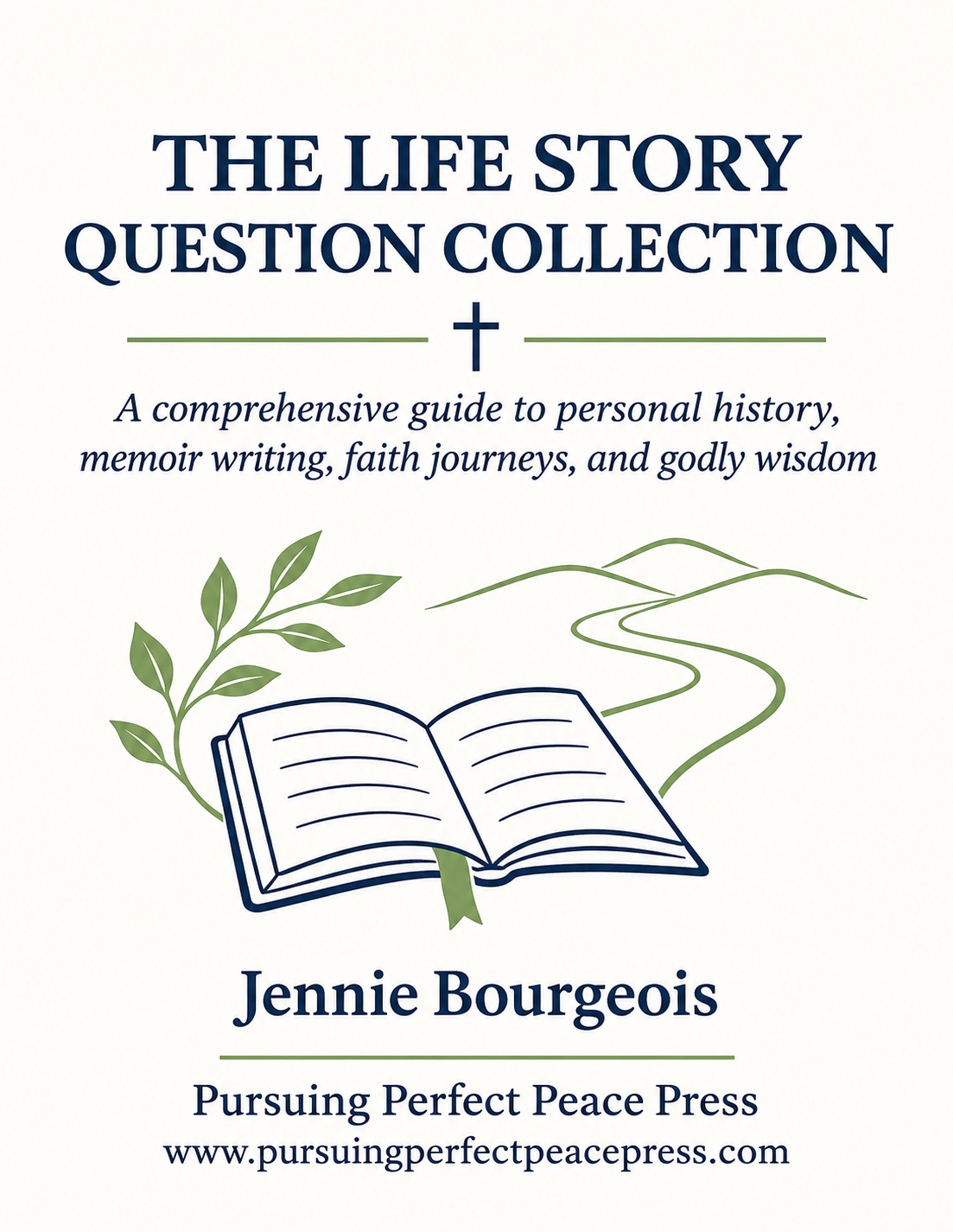
This free collection includes 270 thoughtfully organized questions covering personal history, childhood, family, relationships, work, difficult seasons, salvation, spiritual growth, Scripture, godly wisdom, defining moments, and legacy.
You don't need to answer every question or complete them in order. Choose the questions that fit your life and use them as journal prompts, conversation starters, family interview questions, audio recordings, or beginnings for short memoir stories.
Download the Free Life Story Question CollectionContinue Preserving Your Faith Journey
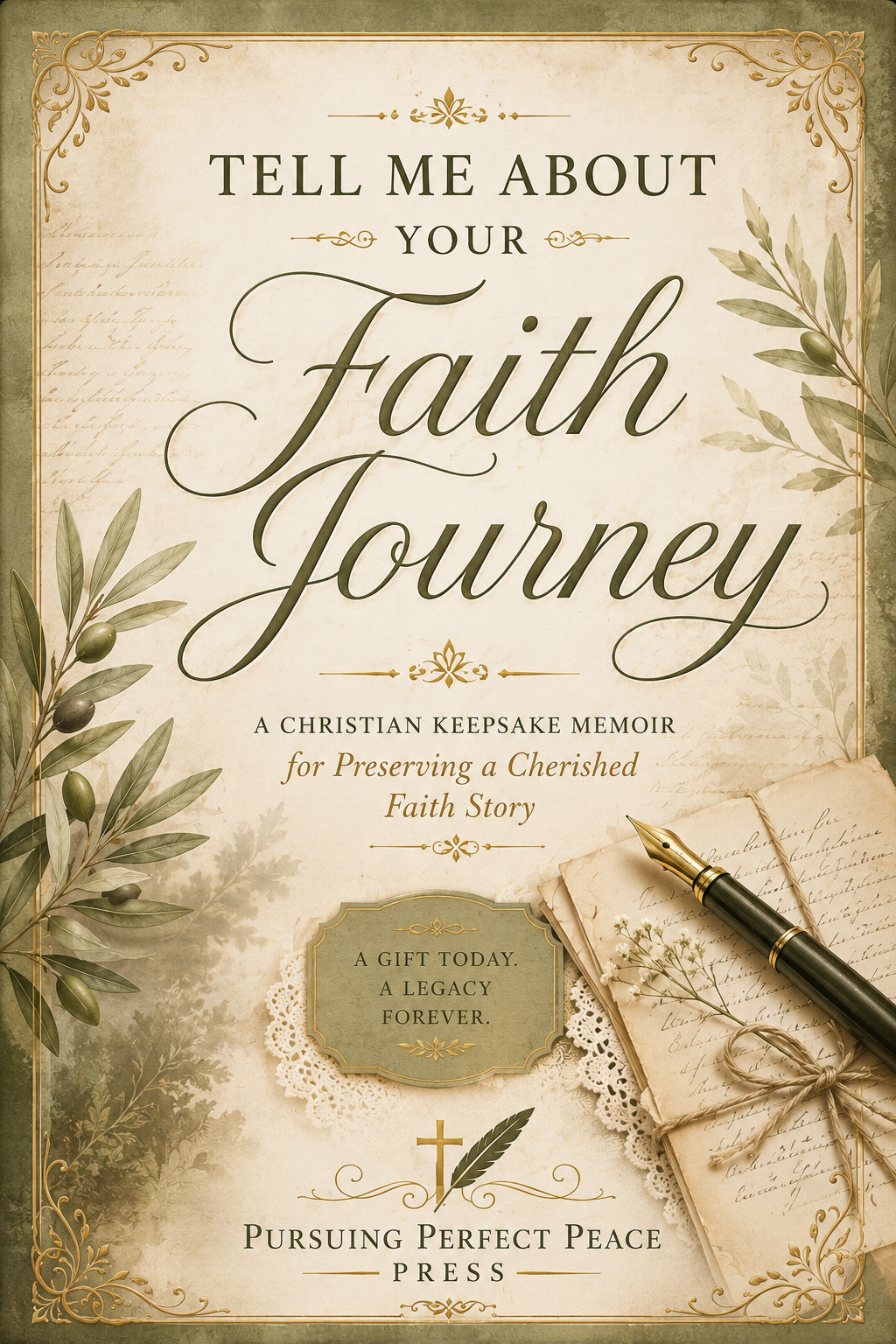
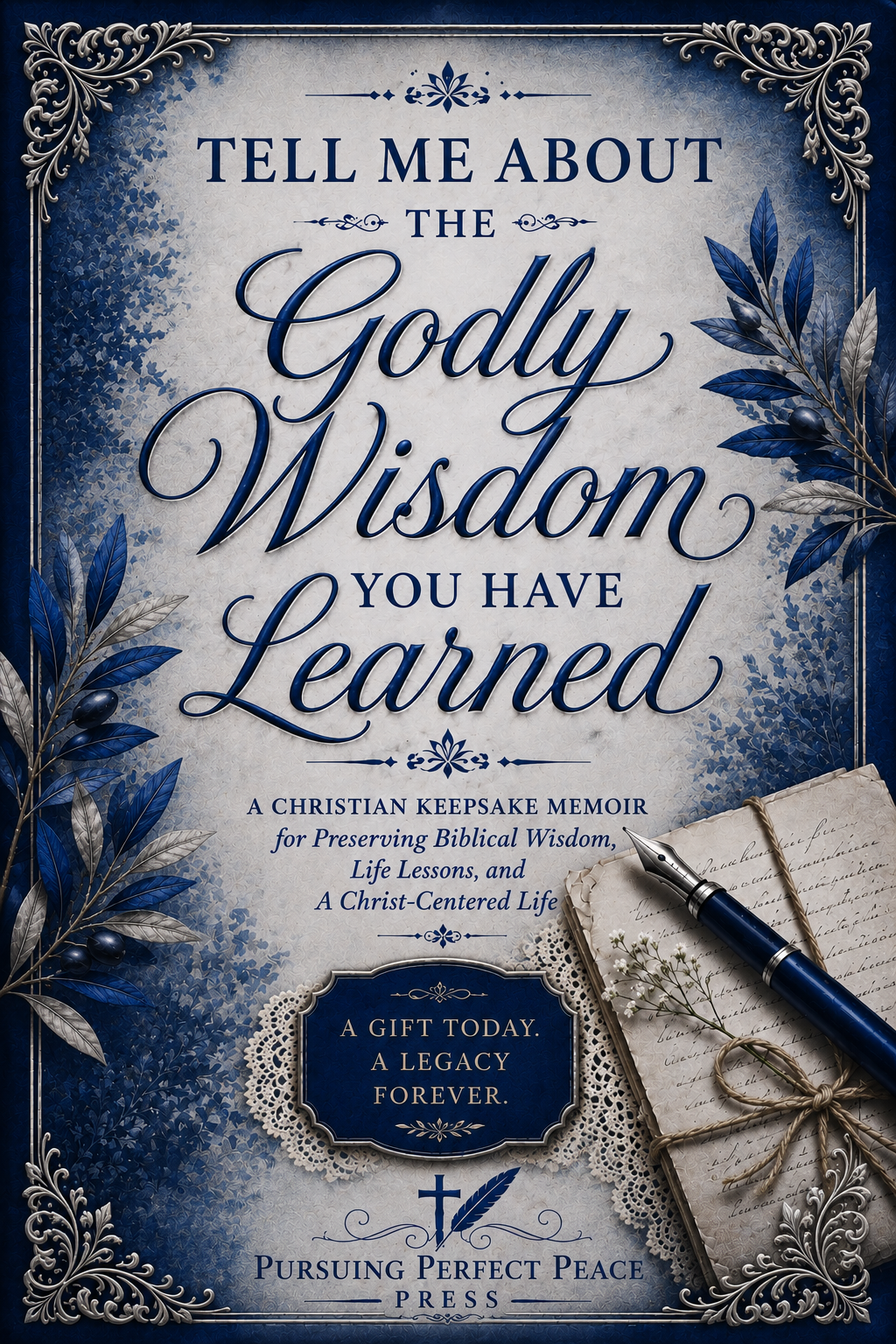
Our Tell Me About Your Faith Journey and Tell Me About the Godly Wisdom You Have Learned Legacy Journals offer guided space to reflect on your experiences, remember important relationships, and preserve the biblical wisdom you have gained along the way.